






How Much Does a Handheld Ultrasound Cost? 2026 Price Breakdown
- 2026-10-23
- 70
- Guangzhou Sonostar Technologies Co., Limited
Ask five vendors what a handheld ultrasound costs and you will get five numbers that differ by a factor of five. That is not deception — it is because "handheld ultrasound" covers everything from a single-array probe sold factory-direct to a subscription-bound ecosystem priced like a hospital IT contract. This guide breaks the 2026 market into four price bands, explains exactly what moves a quote between them, and shows you how to compare two offers that look nothing alike on paper.
The short answer: 2026 price bands
These are open-market ranges compiled from published buyer guides and distributor listings in 2026. They are reference bands, not quotes — final price depends on configuration, region, quantity, and support package.
| Band | Typical configuration | Typical price (USD) | Best for |
|---|---|---|---|
| Entry single-array | One array (convex or linear), 32 channels, B-mode + color | ~$1,500 – $3,000 | Teaching, single-purpose scanning, tight budgets |
| Mid dual-head / 3-in-1 | Two or three arrays in one housing, 32–64 channels, PW Doppler | ~$3,000 – $6,000 | Primary care, ED, mixed-use clinics, veterinary |
| Premium ecosystem | Wide-band or dedicated arrays, AI tools, cloud workflow | ~$5,000 – $10,000+ | Hospital programs, multi-site standardisation |
| Cart-based reference | Console, monitor, multiple transducers | $9,000 – $25,000 | Dedicated imaging rooms, high-volume departments |
Wireless handheld probes as a category typically land between $3,000 and $10,000, while comparable cart-based systems run $9,000 to $25,000 — a gap we break down in the laptop vs handheld vs cart comparison. Factory-direct purchases from a manufacturer generally sit at the lower end of each band because there is no distributor markup in between.
Why you will see lower numbers: manufacturer-direct channels in China routinely quote single-array wireless probes below $2,000. That is a real price for a real device — but check which certifications, Doppler modes, and warranty come with it before treating it as equivalent to a $6,000 quote.
The 8 variables that actually move the price
Two quotes for "a handheld ultrasound" can differ by $5,000 and both be fair. Here is what you are actually paying for.
1. How many arrays are in the probe
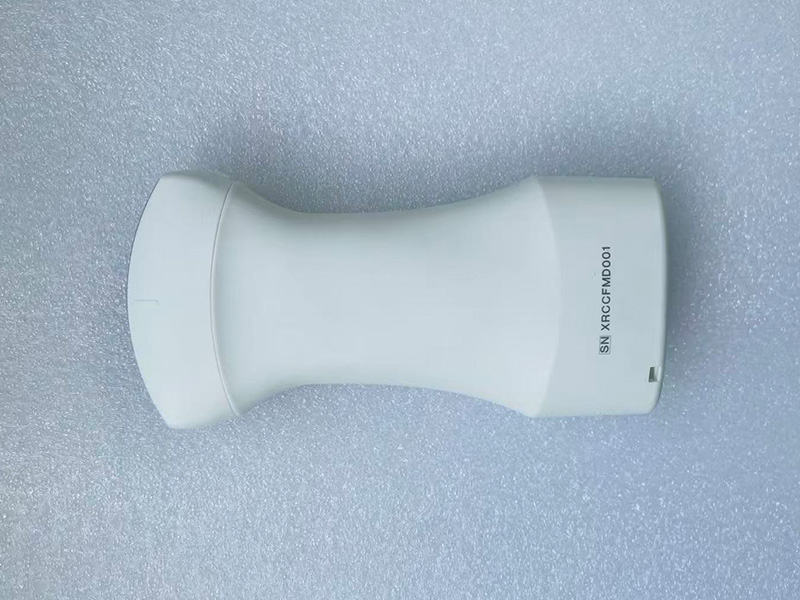
This is the single biggest price driver. One array means one clinical domain: a convex probe such as the 8C covers abdomen and pelvis, a linear probe such as the 8L covers superficial structures, vascular access, and MSK. A 3-in-1 housing — convex plus linear plus phased, as in the 8CPL and 9CPL — puts three domains in one device and costs more per unit but usually less than three separate probes. See the full breakdown in the 3-in-1 wireless probe guide.
2. Channel and element count
Channel count is the quiet specification that separates a $2,000 probe from a $6,000 one. More elements and more transmit/receive channels mean better lateral resolution and cleaner tissue boundaries. For reference within one product family: an entry 3-in-1 may run 128 elements / 32 channels, a mid-tier unit 192 elements / 32 channels, and a flagship 192 elements / 64 channels. If a quote does not state channels and elements, ask — it is the fastest way to explain a price gap.
3. Doppler and imaging modes
B-mode alone is the cheapest configuration. Adding Color Doppler, Power Doppler (PDI), and spectral PW raises both capability and price. If your use case includes vascular access, cardiac windows, or any flow assessment, PW is not optional — see the phased array cardiac POCUS guide for why cardiac work specifically needs it.
4. Wireless versus wired
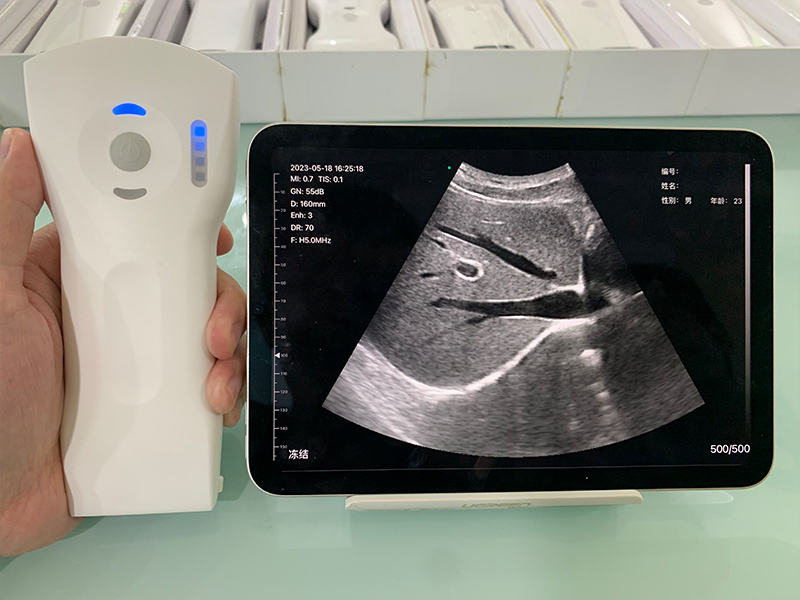
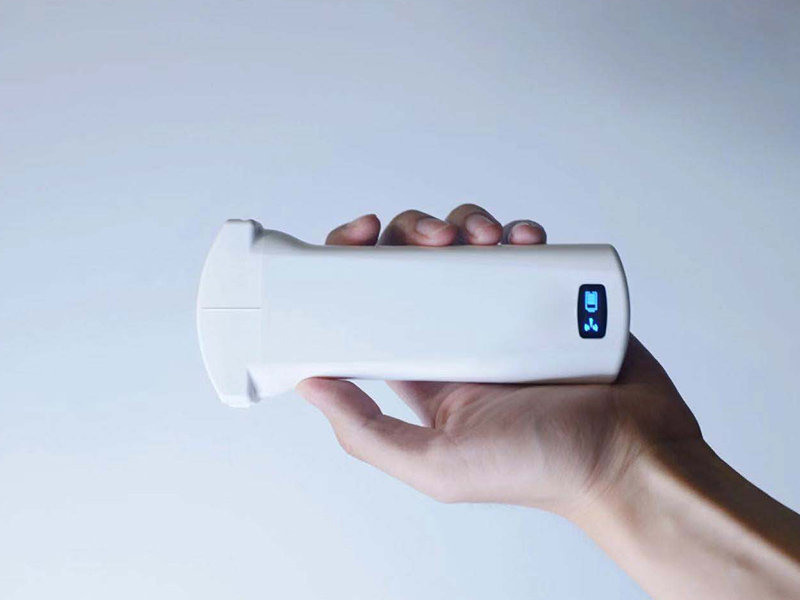
True wireless probes carry the ultrasound engine, battery, and Wi-Fi transmitter inside the housing — that integration costs more than a cabled transducer that leans on a host device. You are paying for freedom of movement and for not needing a dedicated display. Some buyers prefer wired for latency in high-volume interventional work; that is a legitimate trade-off, not a downgrade.
5. The software licensing model
This one does not change the sticker price — it changes what you pay after. Several major brands sell hardware below cost and recover margin through an annual membership. Published third-party buyer guides reviewed in 2026 list annual fees in the range of roughly $300 to $500 per year depending on brand and tier, with multi-year prepay options. Over five years that is a material fraction of the device price. We cover this in depth in the no-subscription TCO guide.
6. Regulatory certifications held
FDA clearance, CE marking, and ISO 13485 quality-system certification each require audit, testing, and documented manufacturing control. That is real cost baked into the price — and it is also what determines whether you can legally import, sell, and use the device in your market. A cheaper device without the certification your regulator requires is not a saving; it is a liability.
7. Battery design
A sealed internal battery is cheaper to build. A replaceable battery system — two cells supplied as standard, each good for roughly two hours of scanning, with wireless charging on top — costs more up front and pays back in uptime for anyone scanning all day. If your probe will run a full clinic list, price this in.
8. Warranty, training, and after-sales
A 12-month warranty and a 36-month warranty are different products with different prices. So is "shipped with a manual" versus "shipped with clinical training and local service." When a quote looks unusually low, the gap is often here.
The recurring cost most price pages omit
Here is where a $3,000 device and a $5,000 device can swap places over three years. Below are published US reference figures from third-party buyer guides reviewed in August 2026. Treat them as indicative — vendors change plans, and regional pricing differs. Always request current written terms.
| Brand / system | Published recurring software cost | Published hardware reference |
|---|---|---|
| Butterfly iQ3 | Core ~$299/yr; Advanced ~$420/yr; 5-yr Advanced prepay ~$1,500 | ~$5,394 – $5,999 with multi-year software |
| GE Vscan Air CL | Innovations ~$500/yr or ~$1,299/3 yr; digital tools ~$1,080/3 yr | Quote-dependent |
| Clarius PAL HD3 | Membership required for some cloud and workflow features | ~$7,895 – $8,870 |
| Philips Lumify | Transducer-dependent, quotation-controlled | ~$36,083 for multi-transducer configuration |
| EchoNous Kosmos | Configuration-based | From ~$7,700 |
Figures are public US reference pricing compiled by third-party buyer guides and reviewed August 2026. Taxes, promotions, institutional discounts, accessories, regional pricing, and distributor quotes all change the final amount. Confirm current terms with each manufacturer.
What that means over five years
Take a mid-range device at $4,000 with no recurring fee against an ecosystem device at $3,000 with a $420/yr subscription:
| Year | No-fee device ($4,000) | Subscription device ($3,000 + $420/yr) |
|---|---|---|
| Purchase | $4,000 | $3,000 |
| Year 1 | $4,000 | $3,420 |
| Year 3 | $4,000 | $4,260 |
| Year 5 | $4,000 | $5,100 |
The cheaper device overtakes the expensive one somewhere in year three, then keeps going. That crossover point is the number worth calculating before you sign — not the number on the quote.
What you get at each price level
Translated into concrete configurations, using one manufacturer's lineup as an illustration of how specification tracks with price:
| Level | Representative configuration | Who should buy it |
|---|---|---|
| Entry | Single array, ~96–128 elements / 32 channels, B + Color, wireless, IP-rated housing | One dominant scan type; teaching; budget-constrained clinics; add-on units |
| Mid | Dual-head or 3-in-1, 192 elements / 32–64 channels, Color + PW + PDI, ~2.5–3 h battery, iOS/Android/Windows | Mixed-use clinics, emergency medicine, veterinary practice |
| High | 3-in-1 flagship, 192 elements / 64 channels, replaceable battery, wireless charging, full Doppler suite, needle guidance | High-volume departments; buyers who need one probe to cover everything |
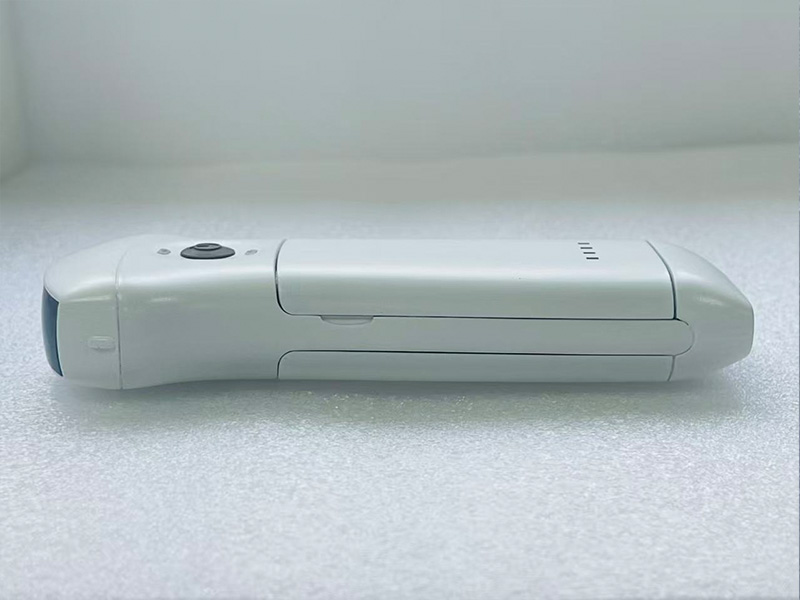
| Interchangeable | Shared handle with swappable transducer heads, magnetic hot-swap connection | Facilities that will add arrays later — one handle amortised across several heads |
An interchangeable-head design is worth a specific mention: if you will likely need more than two arrays over the device's life, one shared handle plus separate heads usually costs less than two or three complete single-probe units. The trade-off is that each head is an additional purchase.
How to compare two quotes that look nothing alike
Never compare total price. Compare a specification sheet. Send every vendor the same twelve-point list and score the responses side by side:
Which arrays? Convex, linear, phased, micro-convex, endocavity, biplane — and how many in one housing.
Elements and channels. Raw numbers, both.
Imaging modes. B, B/M, Color, PDI, PW — list exactly which are included.
Frequency and depth per array. e.g. convex 3.2/5.0 MHz to 305 mm; linear 7.5/10 MHz to 80 mm.
Platform support. Which iOS, Android, and Windows versions, and the specific device list.
Software model. Is the app perpetual? Are updates free? Any annual fee, and what does it unlock?
User seats. Unlimited, or billed per clinician or per tablet?
Storage and export. Local, cloud, DICOM, and whether export is licensed separately.
Certifications. FDA clearance number, CE mark, ISO 13485 — request the actual certificate numbers.
Battery. Internal or replaceable; hours of continuous scanning; charging method.
Ingress protection. IP rating, and whether the probe can be rinsed for disinfection.
Warranty, service, and probe replacement cost. In writing, with a response-time commitment.
Vendors who answer all twelve quickly are usually the ones whose price holds up after purchase. This same list is the backbone of supplier and factory verification when you are sourcing directly.
Regional pricing: why your country changes the number
Two buyers with identical specifications can pay very different amounts. The variables are not arbitrary:
Registration requirements. A device cleared for the US market may need separate registration for India, the UK (UKCA), or Australia (TGA). The certification work is priced into the unit.
Import duty, freight, and local taxes. Often 10–30% of landed cost depending on country and product classification.
Distributor layers. Each layer adds margin. Buying direct removes it, which is why factory-direct quotes differ so sharply from local distributor quotes for the same hardware.
Service infrastructure. Local stock of spare probes and a regional engineer cost money to maintain, and show up in the price.
If you are comparing across regions, quote landed cost — device plus duty plus freight plus tax plus first-year service — not the ex-works number.
Where SonoStar sits in this picture
Stated plainly, so you can judge it against everything above:
Factory-direct. SonoStar manufactures its own wireless probes, so there is no distributor markup between the factory and your clinic. That places comparable specifications at the lower end of each band above.
No recurring software fee. The imaging app and updates are included with the device rather than billed annually. Confirm the current written terms for your configuration — this is the claim worth getting in writing.
Certifications on file. FDA clearance K211321, CE marking (CE 2862), and ISO 13485 quality-system certification.
Broad array coverage. Convex, linear, phased, micro-convex, endocavity, biplane, 3-in-1, and 4D configurations, plus a 4D wireless bladder scanner line.
What it is not. A smaller brand ecosystem than the largest global names. If your purchase is driven by institutional AI tooling, cloud credentialing, or multi-site QA infrastructure, the large ecosystems may justify their premium — that is a genuine trade-off, not a marketing line.
SonoStar does not publish a fixed public price list, because configuration, certification, quantity, and service package all move the number. The fastest accurate answer is a specification sheet against the twelve points above.
Get a price for your actual configuration
Send your array requirements, platform, market, and quantity — and get a factory-direct quote with the software model stated in writing.
Frequently asked questions
How much does a handheld ultrasound cost in 2026?
Expect roughly $1,500–$3,000 for an entry single-array wireless probe, $3,000–$6,000 for a dual-head or 3-in-1 unit, and $5,000–$10,000+ for premium brand ecosystems before any subscription. Cart-based systems run $9,000–$25,000 as a reference point.
Is a cheap handheld ultrasound good enough?
It depends entirely on what "cheap" removed. A low-priced probe with adequate channels, the array you actually need, real certification, and a stated warranty can be excellent value. A low-priced probe that is missing the array you need, has no certification for your market, or locks basic features behind a subscription is not cheap at all. Score it against the twelve points above.
Do handheld ultrasound probes need a subscription?
Some do and some do not. Butterfly, GE, and Clarius tie certain cloud, AI, or workflow features to membership plans; several wireless probe manufacturers — including SonoStar — supply the software with the device. Always get the current terms in writing rather than relying on a marketing page.
What is the cheapest way to cover multiple scan types?
Usually a 3-in-1 probe (convex + linear + phased) rather than three separate units. If you expect to add arrays over time, an interchangeable-head design with one shared handle can be cheaper still across the device's life.
Does price correlate with image quality?
Loosely. Channel count, element count, and beamforming quality matter more than brand price. The honest way to check is a side-by-side scan on your own patients using your most common scan types — not a vendor demo reel. See the 2026 buyer's guide for how to evaluate image quality as a buyer.
How much should I budget beyond the device?
Budget for a spare or replacement probe, a protective case, any annual software fee, extended warranty if offered, and — if you scan across multiple departments — a second display device. For a realistic first-year figure, add 15–25% to the device price.
Price bands, brand figures, and specifications reflect public reference information and manufacturer product pages reviewed in 2026 and are subject to change. Competitor descriptions are general category overviews for comparison purposes and are not clinical endorsements. This article is educational information about medical device procurement, not medical advice. Clinical use must follow local licensing, training, and regulatory requirements; confirm current specifications, certifications, and pricing with the manufacturer before purchase.



 Home
 Product
 News
 Contact