






Why Emergency Centers and Community Hospitals Equip Wireless Portable Palm Ultrasound
- 2026-07-27
- 1724
- Guangzhou Sonostar Technologies Co., Limited
Many procurement professionals struggle to clarify the practical boundaries of wireless ultrasound, and frequently question whether such devices can replace traditional ultrasound systems to undertake full-spectrum multi-department screening. Sonostar has over ten years of experience in portable ultrasound R&D and clinical deployment. The brand regularly handles procurement requests from hospitals, community outpatient centers, township health facilities and health screening teams across the globe. Multiple wireless ultrasound models from Sonostar are currently deployed in thousands of medical institutions nationwide. Based on long-term R&D data and real-world clinical feedback, this article breaks down the adaptability and limitations of laptop-style ultrasound, supporting medical facilities in developing reasonable equipment procurement plans.
1. Core Clinical Screening Requirements: Three Key Evaluation Criteria
When medical institutions select ultrasound equipment, suitability should be judged against three practical standards rather than relying purely on imaging parameters.
Versatility. One single unit should cover four mainstream screening fields: abdominal, obstetrics & gynecology, superficial tissue and emergency care. This avoids extra expenditure on multiple dedicated machines.
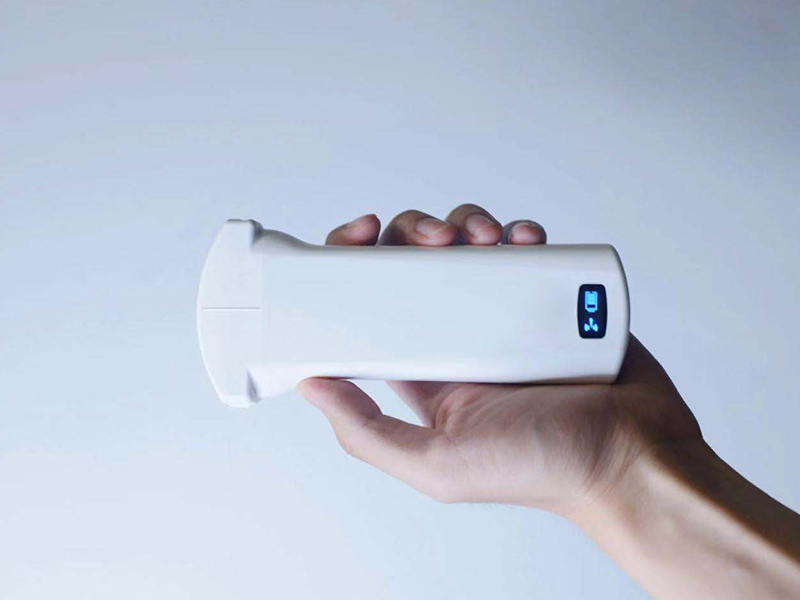
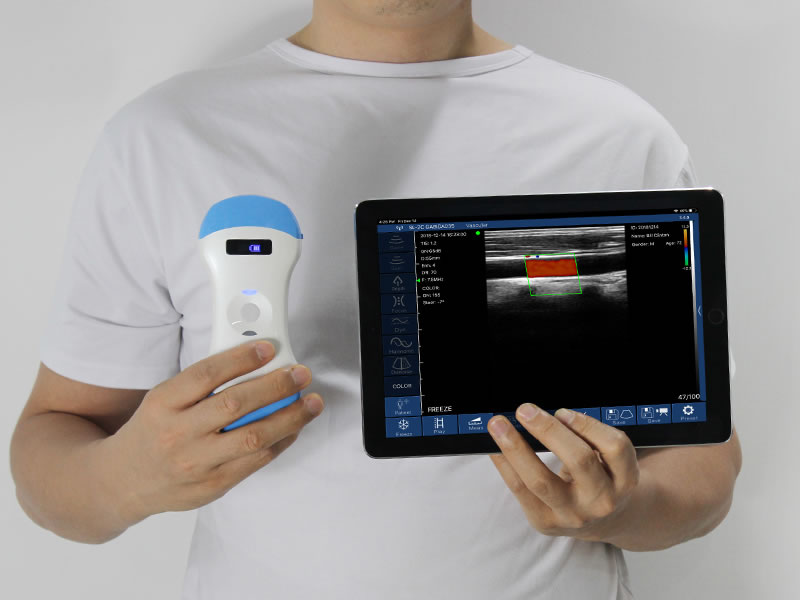
Mobility. The device must support rapid examinations in ward bedside visits, emergency transfers and rural outreach health campaigns without limitations imposed by cables or heavy trolleys.
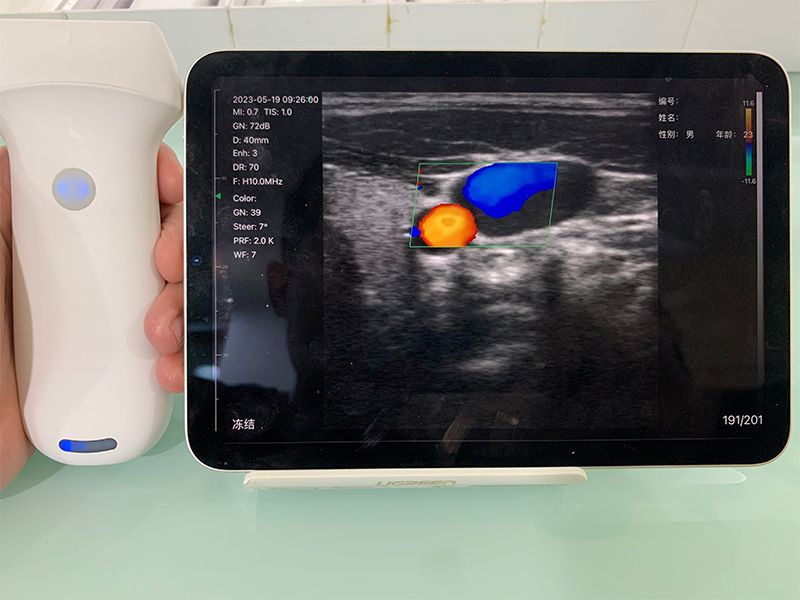
Reliability for basic diagnosis. It should clearly display organ morphology and blood flow signals, identify basic lesions, and support measurement, image archiving and print functions to meet medical record standards.
2. Wireless Laptop Ultrasound vs Conventional Cart Systems: Advantages for Multi-Department Rotation

Greater Flexibility for Limited Clinical Space
Small outpatient clinics and community health centers usually operate with limited consultation rooms and cannot afford dedicated ultrasound suites for separate examinations. Laptop ultrasound units are lightweight and require no external trolleys. Clinicians can easily move the machine between gynecology, internal medicine and health screening rooms. Bedside ward rounds no longer require transporting bulky cart systems. The equipment can also be carried inside ambulances and mobile health vehicles, resolving space shortages at grassroots facilities.
Improved Patient Throughput
Wired ultrasound probes often tangle and restrict scanning angles, forcing repeated repositioning for obese patients, bedridden seniors and post-operative individuals. Wireless probes provide unconstrained movement ranges. Single-scan duration can be shortened effectively, enabling higher patient throughput during mass health screening events.
Lower Procurement & Maintenance Costs
A single laptop-style ultrasound can be shared across multiple departments, removing the need to buy separate abdominal and superficial ultrasound devices and significantly cutting capital expenditure. The compact unit has fewer mechanical trolley components. Repair and replacement costs remain far lower than large cart ultrasound machines, making the solution ideal for budget-limited grassroots healthcare organizations.

3. Clinical Performance Across Departments: Suitable and Unsuitable Use Cases
Suitable Scenarios — Fully Sufficient for Routine Primary Screening
Basic obstetric check-ups and pelvic screening in obstetrics & gynecology
Abdominal organ examinations targeting liver, spleen, kidneys and bladder
Superficial screening for thyroid nodules, breast lesions and subcutaneous masses
Emergency rapid assessment for abdominal effusion and traumatic injuries
Large-scale public health outreach physical examinationsThese procedures only require basic lesion identification and standard biometric measurements. Ultra-fine vascular visualization or detailed fetal anatomical analysis is not mandatory. Wireless laptop ultrasound delivers satisfactory image clarity. Built-in measurement software generates examination records to satisfy medical filing regulations.
Unsuitable Scenarios — Not Recommended as Primary Diagnostic Equipment
Comprehensive fetal anomaly scans, complex fetal echocardiography and high-resolution diagnosis of microvascular lesions in tertiary hospitals
High-volume specialized ultrasound clinics conducting over one hundred detailed diagnostic scans every dayWireless data transmission introduces minor signal attenuation. Compared with premium wired cart ultrasound systems, resolution for fine tissue differentiation is limited. Such devices may fail to display subtle anatomical details for complex difficult cases and should only be deployed for preliminary triage screening.

Frequently Asked Questions
Q1: Can unstable wireless probe signals lead to missed detection of tiny lesions?
A: Reputable wireless ultrasound brands such as Sonostar adopt dedicated Wi-Fi transmission links. No obvious latency or image distortion occurs during routine visceral and large-vessel screening. Resolution for millimeter-scale lesions and tiny blood vessels falls short of wired systems. Standard primary screening will not result in missed diagnoses, yet sophisticated diagnostic cases still require confirmation via wired ultrasound machines.
Q2: Can the battery support full-day service with multi-department shift work?
A: Sonostar’s main unit offers roughly 2 hours of continuous operation. Each wireless probe runs for 2–5 hours. For continuous mass screening, facilities can deploy two interchangeable probes for rotational charging during lunch breaks to sustain full-day service. Portable power banks can supply power for outreach locations without mains electricity.

Conclusion
Taking multi-department clinical workflows, space constraints and procurement budgets into consideration, laptop-style ultrasound represents a cost-effective primary screening solution for grassroots medical institutions. It addresses gaps traditional equipment cannot cover, including inter-room rotation, emergency bedside examinations and mobile outreach screening. Nevertheless, it cannot handle high-precision sophisticated diagnostic work.
Medical facilities can tailor procurement strategies based on daily patient volumes and case complexity. Outpatient clinics and health screening centers can adopt one shared wireless laptop ultrasound for general-purpose multi-department use. Health centers receiving heavy patient loads and numerous complicated cases can implement a hybrid workflow: wireless ultrasound for initial screening combined with high-end wired ultrasound systems for definitive diagnosis, balancing clinical demands and capital investment.



 Home
Home Product
 News
News Contact