





Handheld Ultrasound OEM/ODM: Private Label, Customization & White-Label Guide
- 2026-10-16
- 55
- Guangzhou Sonostar Technologies Co., Limited
Selling under your own brand can lift margin and lock in customer loyalty — but only if the manufacturing partnership is structured correctly. This guide explains OEM vs ODM vs white-label for handheld ultrasound, the realistic scope of customization, how certifications transfer to your brand, and the questions to settle before signing.
1. OEM vs ODM vs White-Label — Know the Model
| Model | What the manufacturer does | Best when |
|---|---|---|
| White-label | Existing product, your logo/brand applied. | You want speed to market with minimal development. |
| OEM | Builds to your spec/brand; you own the brand and often the design input. | You have a defined product concept and want it made. |
| ODM | Co-develops the product using the manufacturer's platform and engineering. | You want differentiated features without building R&D from scratch. |
For handheld ultrasound, most China manufacturers operate as OEM/ODM: they own the acoustic and software platform and adapt housing, branding, and configuration to your market.

2. What You Can Actually Customize
Customization depth varies by manufacturer. A capable OEM/ODM partner typically offers:
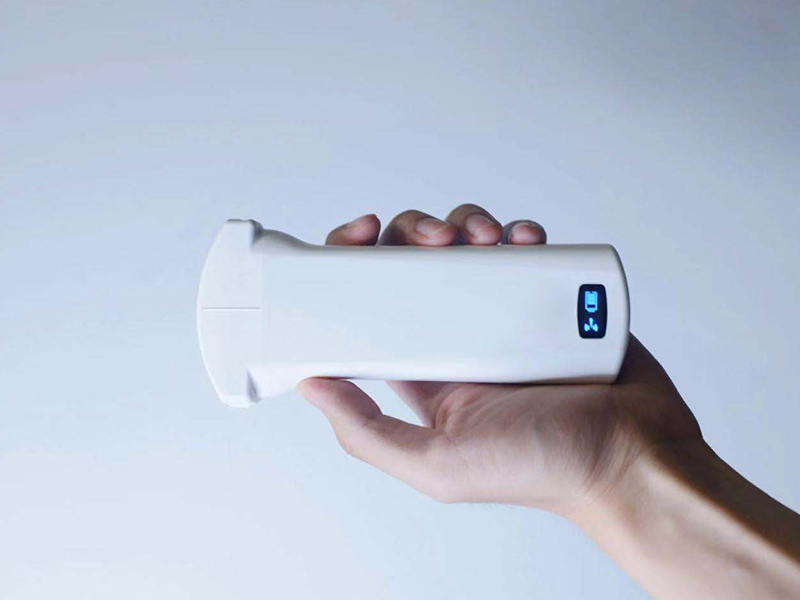
Housing & buttons: Shell color and button color customization (e.g., the 8CPL/9CPL 3-in-1 probes support custom shell and button colors).
Branding: Logo on the device, boot screen, packaging, and quick-start guide.
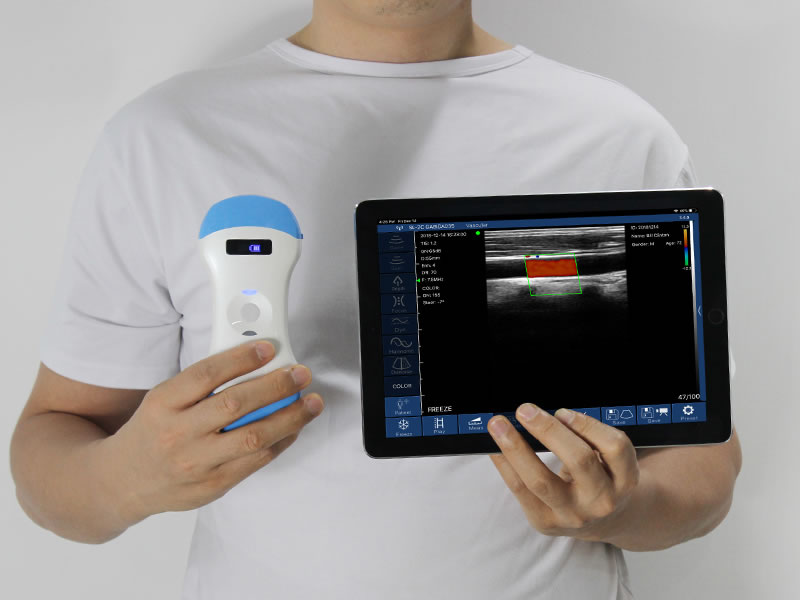
Software / App: Rebrandable companion app, multi-language UI, and OTA firmware updates. A manufacturer-controlled software stack (such as SonoStar's "SmartUSG" app) makes app branding and updates feasible.
Documentation: Multi-language manuals, leaflets, and regulatory folders tailored to your market.
Product mix: Convex, linear, phased-array, and 3-in-1 probes; single/dual-battery versions; optional 3D/4D.
3. Certification Under Your Brand
This is where own-brand projects stall if not planned early. Two paths exist:
Manufacturer's certificate, your brand as "authorized representative / distributor": Fastest; the device carries the factory's CE/FDA filing, and you market as the local distributor.
Certificate in your own name (private label holder): You become the legal manufacturer of record. Requires additional documentation, possible re-testing, and longer lead time.
Reality check: Established manufacturers already hold CE, ISO 13485, and FDA certifications plus country registrations (Russia, Japan, Brazil, Australia, Türkiye, Argentina, Indonesia). Confirm up front whether your model will ride the factory's certificate or need a standalone filing in your name — this decides your timeline and budget.
4. MOQ, Lead Time & Pricing Tiers
These are negotiable but follow patterns. Ask for tiered pricing so unit cost drops as volume rises:
| Factor | What to clarify |
|---|---|
| MOQ per model | Minimum order quantity; often lower for white-label, higher for full ODM. |
| Lead time | Standard models vs. customized (color/logo/app) — customization adds weeks. |
| Price tiers | Per-unit price at 50 / 200 / 500 / 1000+ units. |
| Tooling & setup | One-time mold/printing/software setup fees for exclusive colors or app skins. |
| Warranty & spares | Warranty length, spare-part price list, and RMA process. |
5. Software, Firmware & Updates
For a wireless probe, the app is part of the product. Before signing, confirm:
Who owns the app branding and can push language/UI changes?
How firmware updates are delivered (OTA vs. manual) and whether they're included post-sale.
Data export formats (jpg, MP4, DICOM) and any cloud/telemedicine integration.
6. IP & Brand Protection
Trademark: Register your brand in your target markets before production, not after.
Exclusivity: If you commission a unique color or feature, get written exclusivity for your region.
Design ownership: Clarify who holds patents/tooling if the partnership ends.
7. Contract & RFQ Checklist
Model & scope: which probe types, battery version, imaging modes.
Customization: shell/button color, logo placement, app skin, languages, packaging.
Certification path: factory cert vs. your-brand cert, with responsible party named.
Commercials: MOQ, tiered price, tooling fee, lead time, Incoterms, payment terms.
After-sales: warranty, spare parts, firmware support, RMA handling.
IP: trademark, regional exclusivity, design/tooling ownership.
References: existing OEM/ODM distributors in comparable markets.
8. Before You Start: Verify the Manufacturer First
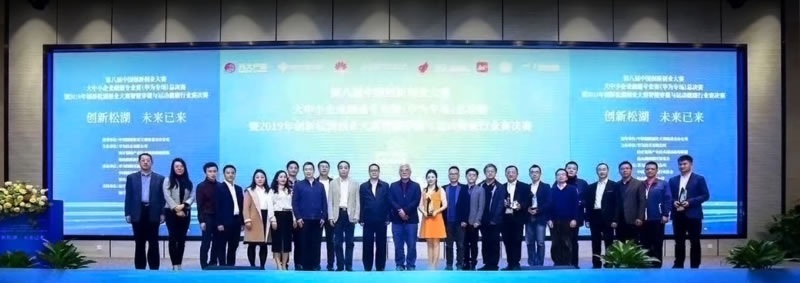
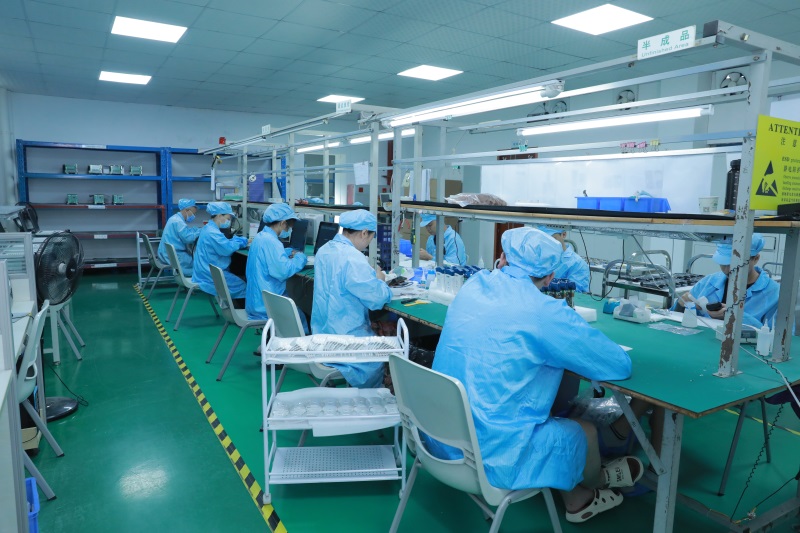
Customization only matters if the partner is real and compliant. Run the factory verification checklist first — confirm years in business, in-house R&D, patents, and independently verifiable CE / ISO 13485 / FDA certificates. SonoStar, for context, was founded in 2011, reports shipments to 100+ countries, and exhibits at MEDICA, FIME, RSNA, CMEF, and AUA.
Related reading: types of ultrasound probes, 3-in-1 wireless probe, and supporting services a manufacturer provides.
Frequently Asked Questions
What is the difference between OEM, ODM, and white-label?
White-label applies your brand to an existing product; OEM builds to your spec/brand; ODM co-develops using the manufacturer's platform. Handheld ultrasound is mostly OEM/ODM.
Can I put my own brand on a handheld ultrasound?
Yes. Most China manufacturers support logo, housing color, app skin, and packaging customization. Confirm MOQ and setup fees for exclusive options.
Will the device carry CE/FDA under my brand?
Either it rides the factory's certificate (you as distributor) or you file as the legal manufacturer of record. The second path takes longer and costs more — decide early.
What MOQ and lead time should I expect?
MOQ and lead time vary by model and customization depth. Always get tiered pricing and written lead times before ordering.
Who handles software updates and the app?
Confirm whether the manufacturer controls the app and can push OTA firmware updates and language/UI changes under your brand.
How do I protect my brand and exclusivity?
Register your trademark before production, get regional exclusivity in writing for unique features/colors, and clarify design/tooling ownership in the contract.
Planning an own-brand handheld ultrasound?
Compare OEM/ODM scope, certification paths, and MOQ across manufacturers. View the manufacturer profile or explore the 3-in-1 probe, linear probe, and convex probe lines.
This guide is for procurement and partnership planning only, not legal or regulatory advice. Certification and trademark strategy should be confirmed with qualified counsel and the relevant authorities in your target market.



 Home
Home Product
 News
News Contact