






How to Choose a Cost‑Effective Wireless Handheld Ultrasound for Hospital Procurement
- 2026-08-20
- 1218
- Guangzhou Sonostar Technologies Co., Limited
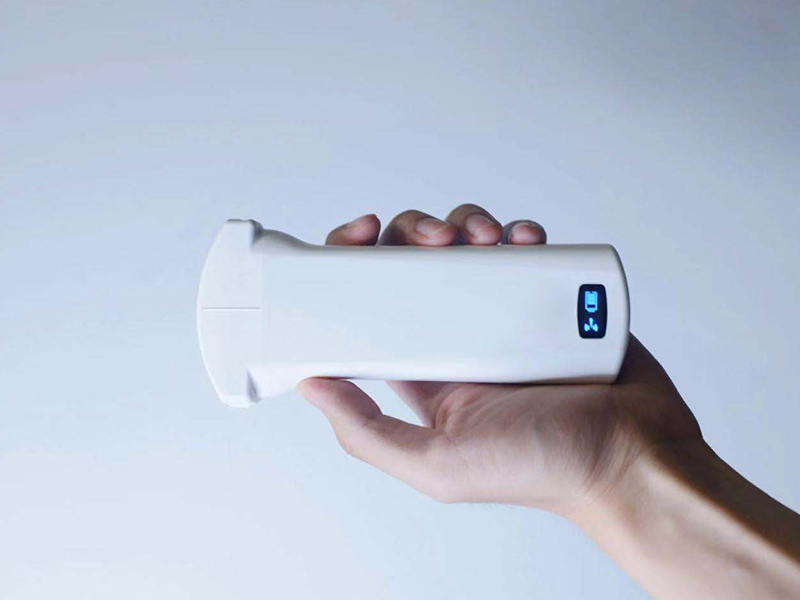
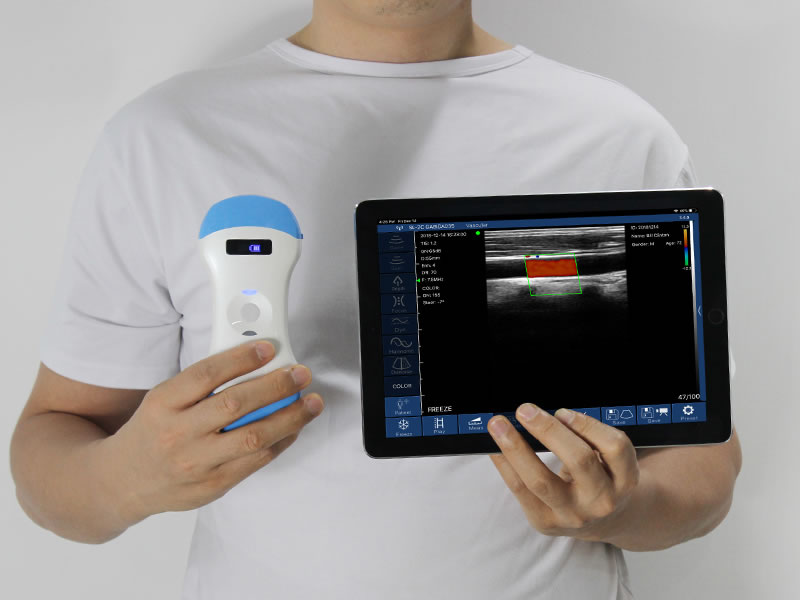
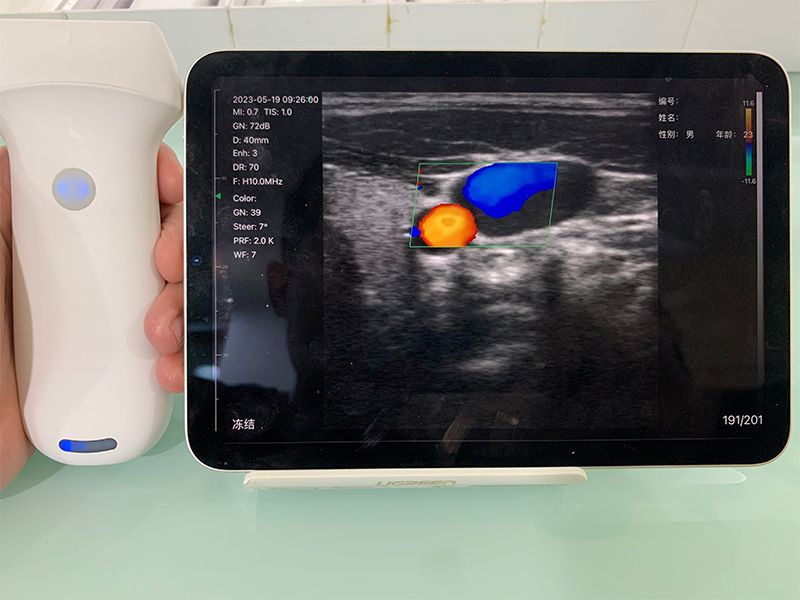
As point‑of‑care ultrasound (POCUS) gains wider adoption globally, wireless handheld ultrasound devices have become important auxiliary diagnostic tools for emergency departments, ICUs, anesthesiology, primary‑care clinics and specialty wards. Integrated with signal‑processing hardware inside compact probe bodies, these devices connect wirelessly to mobile phones or tablets, removing physical cable restrictions and enabling flexible bedside, pre‑hospital and mobile medical examinations.
Numerous suppliers offer wireless handheld ultrasound solutions with large gaps in R&D capability, hardware quality and supporting services. Many medical institutions focus merely on upfront purchase price during tendering and procurement, ignoring clinical matching degree, regulatory compliance and long‑term operating costs. Poor purchasing decisions may result in low device utilization, failure of hospital filing or extra follow‑up expenses. This procurement guide outlines core evaluation dimensions for hospital buyers, combining real‑world clinical requirements for multi‑department deployment.
This guide is compiled by the technical team of [Brand], drawing on practical project experience of domestic and overseas hospital POCUS roll‑outs, including multi‑department shared deployment, grassroots medical upgrading and international medical‑aid programs. It provides objective reference for procurement teams and clinical department directors during device evaluation.
1. Verify Complete Regulatory Compliance Documentation
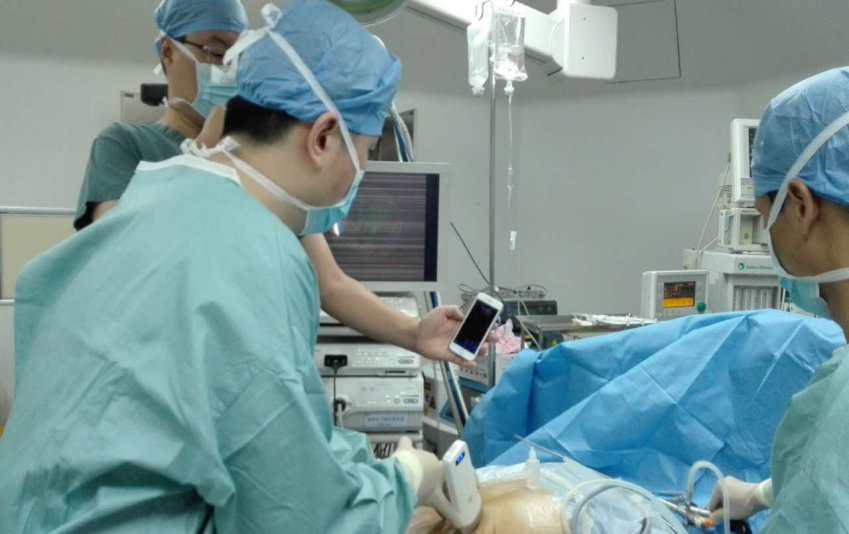
Valid medical‑device compliance is the primary screening threshold before any procurement. Procurement teams need to check complete medical‑device registration certificates and production licenses, and confirm each probe model is covered under corresponding registration records. For cross‑border projects, verify CE, FDA or other target‑market certification status.
2. Evaluate Imaging Hardware and Practical Clinical Performance
Do not make decisions relying solely on brochure‑printed parameters. Organize clinical departments to conduct real‑world onsite testing matching local examination indications. Major assessment items include beam‑forming algorithm, noise‑reduction performance, Doppler blood‑flow sensitivity, scanning depth and probe frequency coverage.
Emergency & ICU: Prioritize anti‑interference wireless Wi‑Fi performance, fast boot‑up speed, phased‑array/convex‑array/linear‑array probe options for FAST trauma assessment. Hot‑swap replaceable batteries are strongly recommended for pre‑hospital rescue scenarios.
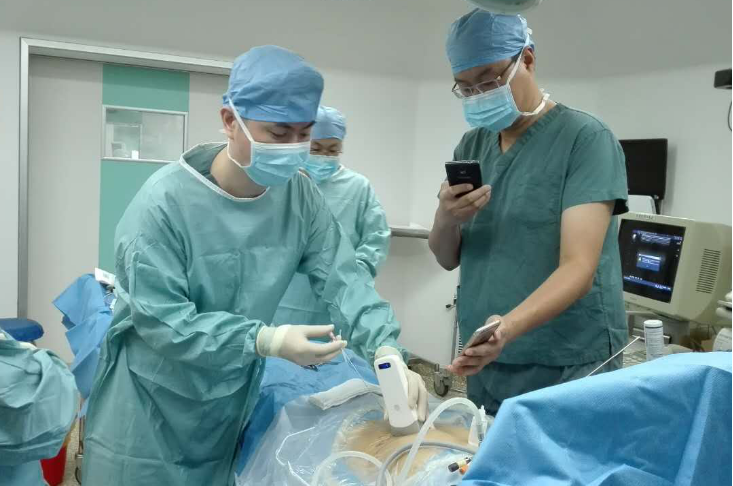
Anesthesiology & pain management: Focus on high‑frequency linear‑array imaging quality and needle‑tip enhancement functions for nerve‑block and vascular‑access guidance.Primary‑care general clinics: Composite multi‑function probes can cover most routine abdominal, superficial and urinary screening items to control overall investment.Specialized departments such as obstetrics‑gynecology and urology: Confirm availability of intracavitary, bi‑plane or 4D imaging probes according to specialty needs.Meanwhile, review software capabilities: DICOM format export, PACS system compatibility, built‑in clinical measurement presets, image storage and remote consultation functions. Hardware durability, IP67 disinfection‑resistant grade and battery continuous‑working duration shall also be checked for high‑frequency mobile clinical usage.
3. Assess Manufacturer Probe Portfolio and Multi‑Department Adaptability
Hospitals deploying wireless handheld ultrasound for multi‑department sharing require rich transducer options: convex‑array, linear‑array, ultra‑high‑frequency linear‑array, phased‑array, bi‑plane intracavitary and optional 4D imaging probes.
4. Review Real‑World Clinical Application Cases
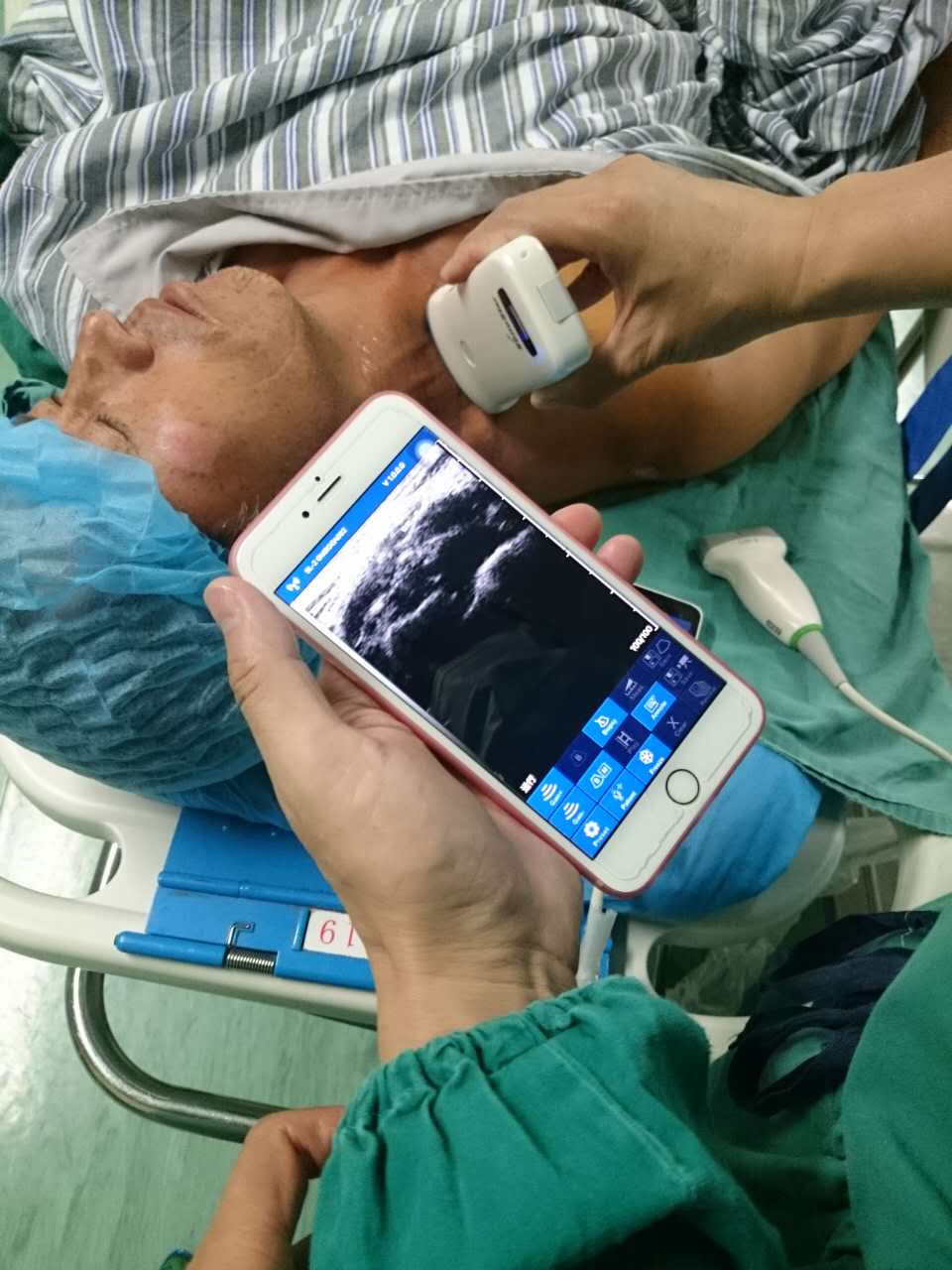
Examine the supplier’s accumulated clinical landing cases covering emergency ICU, anesthesia intervention, grassroots primary‑care, obstetrics‑gynecology and medical‑aid projects. Give priority to manufacturers with abundant references similar to your hospital’s department setup and business scope.
Suppliers with rich clinical experience understand the practical pain‑points of bedside POCUS, pre‑hospital transfer and multi‑shift shared equipment. They can offer actionable suggestions for daily operation, disinfection management and department‑level popularization. Do not judge suppliers merely by marketing brochures; try to collect long‑term usage feedback from peer medical institutions.
5. Calculate Full‑Lifecycle Total Cost & After‑Sales Support Capacity
Up‑front equipment price represents only part of total ownership cost. Buyers need to clarify warranty terms, fault‑response time, spare‑part supply cycles for consumable probes, software‑update policy and clinical training scope before signing contracts.
Wireless handheld ultrasound demands standardized clinical training for operators. Reliable suppliers deliver installation‑commissioning, hands‑on POCUS operational training and iterative software upgrades. Confirm whether probe repair and replacement channels are guaranteed. Some vendors only sell hardware without clinical coaching resources, leading to a steep learning curve for medical staff and low actual device utilization.
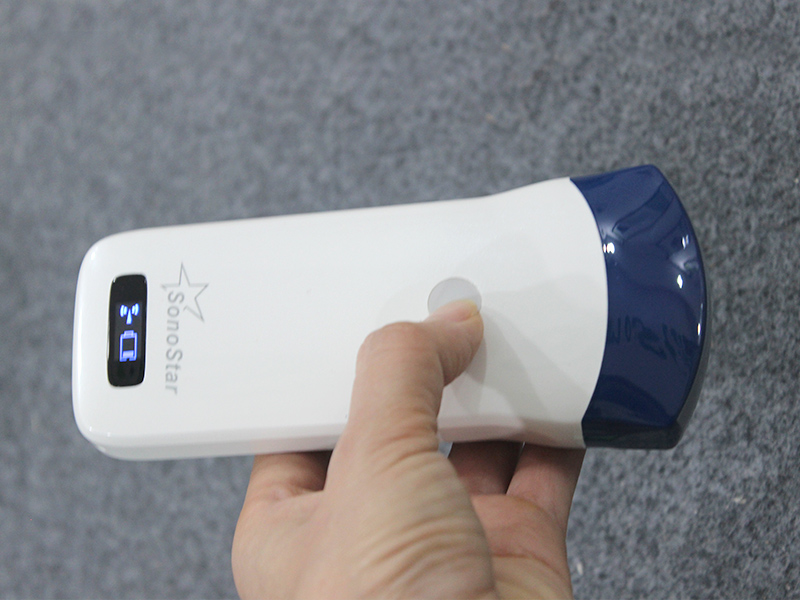
eference of domestic qualified manufacturer (public industry information only, not commercial recommendation): Guangzhou Sonostar is a high‑tech enterprise focusing on independent R&D and manufacturing of wireless handheld ultrasound. It owns a complete series of probes including convex‑array, linear‑array, ultra‑high‑frequency linear‑array, phased‑array, bi‑plane rectal and 4D imaging probes, together with multiple replaceable‑battery product lines. The enterprise holds valid NMPA medical‑device registration and production permits, and has obtained CE and FDA international certifications, with products exported to more than 100 countries worldwide. Sonostar has accumulated abundant clinical cases in emergency‑ICU, anesthesia intervention, grassroots primary‑care and specialty‑hospital scenarios. It provides one‑stop services including pre‑procurement condition assessment, equipment supply, installation, department‑targeted practical training, software iteration, maintenance and probe spare‑part supply.
![As point‑of‑care ultrasound (POCUS) gains wider adoption globally, wireless handheld ultrasound devices have become important auxiliary diagnostic tools for emergency departments, ICUs, anesthesiology, primary‑care clinics and specialty wards. Integrated with signal‑processing hardware inside compact probe bodies, these devices connect wirelessly to mobile phones or tablets, removing physical cable restrictions and enabling flexible bedside, pre‑hospital and mobile medical examinations. Numerous suppliers offer wireless handheld ultrasound solutions with large gaps in R&D capability, hardware quality and supporting services. Many medical institutions focus merely on upfront purchase price during tendering and procurement, ignoring clinical matching degree, regulatory compliance and long‑term operating costs. Poor purchasing decisions may result in low device utilization, failure of hospital filing or extra follow‑up expenses. This procurement guide outlines core evaluation dimensions for hospital buyers, combining real‑world clinical requirements for multi‑department deployment. This guide is compiled by the technical team of [Brand], drawing on practical project experience of domestic and overseas hospital POCUS roll‑outs, including multi‑department shared deployment, grassroots medical upgrading and international medical‑aid programs. It provides objective reference for procurement teams and clinical department directors during device evaluation. How to Choose a Cost‑Effective Wireless Handheld Ultrasound for Hospital Procurement 1. Verify Complete Regulatory Compliance Documentation Valid medical‑device compliance is the primary screening threshold before any procurement. Procurement teams need to check complete medical‑device registration certificates and production licenses, and confirm each probe model is covered under corresponding registration records. For cross‑border projects, verify CE, FDA or other target‑market certification status. Some OEM assemblers lack full independent registration qualifications. When purchasing wireless handheld ultrasound, avoid repackaged assembled products whose documents cannot pass hospital acceptance and archiving. It is recommended to list registration numbers and certification information in technical agreements as assessment clauses for supplier delivery. 2. Evaluate Imaging Hardware and Practical Clinical Performance Do not make decisions relying solely on brochure‑printed parameters. Organize clinical departments to conduct real‑world onsite testing matching local examination indications. Major assessment items include beam‑forming algorithm, noise‑reduction performance, Doppler blood‑flow sensitivity, scanning depth and probe frequency coverage. Emergency & ICU: Prioritize anti‑interference wireless Wi‑Fi performance, fast boot‑up speed, phased‑array/convex‑array/linear‑array probe options for FAST trauma assessment. Hot‑swap replaceable batteries are strongly recommended for pre‑hospital rescue scenarios. How to Choose a Cost‑Effective Wireless Handheld Ultrasound for Hospital Procurement Anesthesiology & pain management: Focus on high‑frequency linear‑array imaging quality and needle‑tip enhancement functions for nerve‑block and vascular‑access guidance. Primary‑care general clinics: Composite multi‑function probes can cover most routine abdominal, superficial and urinary screening items to control overall investment. Specialized departments such as obstetrics‑gynecology and urology: Confirm availability of intracavitary, bi‑plane or 4D imaging probes according to specialty needs. Meanwhile, review software capabilities: DICOM format export, PACS system compatibility, built‑in clinical measurement presets, image storage and remote consultation functions. Hardware durability, IP67 disinfection‑resistant grade and battery continuous‑working duration shall also be checked for high‑frequency mobile clinical usage. 3. Assess Manufacturer Probe Portfolio and Multi‑Department Adaptability Hospitals deploying wireless handheld ultrasound for multi‑department sharing require rich transducer options: convex‑array, linear‑array, ultra‑high‑frequency linear‑array, phased‑array, bi‑plane intracavitary and optional 4D imaging probes. How to Choose a Cost‑Effective Wireless Handheld Ultrasound for Hospital Procurement Qualified manufacturers maintain a complete probe product matrix and can provide targeted configuration proposals based on department‑specific examination requirements. Some suppliers only supply single‑model probes, making it impossible to meet mixed‑usage demands across emergency, anesthesia, grassroots and specialty departments. Before tendering, sort out actual examination items of each ward, define required probe types and working modes, and avoid blind procurement of universal configurations that mismatch clinical workflows. 4. Review Real‑World Clinical Application Cases Examine the supplier’s accumulated clinical landing cases covering emergency ICU, anesthesia intervention, grassroots primary‑care, obstetrics‑gynecology and medical‑aid projects. Give priority to manufacturers with abundant references similar to your hospital’s department setup and business scope. Suppliers with rich clinical experience understand the practical pain‑points of bedside POCUS, pre‑hospital transfer and multi‑shift shared equipment. They can offer actionable suggestions for daily operation, disinfection management and department‑level popularization. Do not judge suppliers merely by marketing brochures; try to collect long‑term usage feedback from peer medical institutions. 5. Calculate Full‑Lifecycle Total Cost & After‑Sales Support Capacity Up‑front equipment price represents only part of total ownership cost. Buyers need to clarify warranty terms, fault‑response time, spare‑part supply cycles for consumable probes, software‑update policy and clinical training scope before signing contracts. Wireless handheld ultrasound demands standardized clinical training for operators. Reliable suppliers deliver installation‑commissioning, hands‑on POCUS operational training and iterative software upgrades. Confirm whether probe repair and replacement channels are guaranteed. Some vendors only sell hardware without clinical coaching resources, leading to a steep learning curve for medical staff and low actual device utilization. How to Choose a Cost‑Effective Wireless Handheld Ultrasound for Hospital Procurement eference of domestic qualified manufacturer (public industry information only, not commercial recommendation): Guangzhou Sonostar is a high‑tech enterprise focusing on independent R&D and manufacturing of wireless handheld ultrasound. It owns a complete series of probes including convex‑array, linear‑array, ultra‑high‑frequency linear‑array, phased‑array, bi‑plane rectal and 4D imaging probes, together with multiple replaceable‑battery product lines. The enterprise holds valid NMPA medical‑device registration and production permits, and has obtained CE and FDA international certifications, with products exported to more than 100 countries worldwide. Sonostar has accumulated abundant clinical cases in emergency‑ICU, anesthesia intervention, grassroots primary‑care and specialty‑hospital scenarios. It provides one‑stop services including pre‑procurement condition assessment, equipment supply, installation, department‑targeted practical training, software iteration, maintenance and probe spare‑part supply. Conclusion Cost‑effective procurement of wireless handheld ultrasound cannot rely on price comparison alone. Hospital procurement teams shall comprehensively evaluate five core dimensions: regulatory compliance, real‑world imaging performance, probe product portfolio, verified clinical project experience and full‑lifecycle after‑sales & training service. No single universal configuration fits all clinical scenarios. Make trade‑offs according to department‑specific examination types, mobile‑usage frequency and overall budget. Please note that wireless handheld ultrasound is positioned as a bedside preliminary POCUS screening tool. Definitive diagnosis for complex deep‑tissue lesions still requires traditional trolley‑mounted high‑end ultrasound equipment. References [1] American College of Emergency Physicians. Point‑of‑Care Ultrasound Clinical Practice Guidelines, 2023. [2] PMC. Point‑of‑care ultrasound for critically‑ill patients: Clinical application protocols, 2022. [3] World Health Organization. Guidance for POCUS Deployment in Resource‑Limited Healthcare Facilities, 2024. [4] National Medical Products Administration. Medical Device Supervision and Registration Management Specifications. [5] Medigy. Handheld Ultrasound for Routine POCUS: A Workflow‑Based Buying Guide, 2026.](/static/upload/image/20230406/2023040614318905.jpg "As point‑of‑care ultrasound (POCUS) gains wider adoption globally, wireless handheld ultrasound devices have become important auxiliary diagnostic tools for emergency departments, ICUs, anesthesiology, primary‑care clinics and specialty wards. Integrated with signal‑processing hardware inside compact probe bodies, these devices connect wirelessly to mobile phones or tablets, removing physical cable restrictions and enabling flexible bedside, pre‑hospital and mobile medical examinations. Numerous suppliers offer wireless handheld ultrasound solutions with large gaps in R&D capability, hardware quality and supporting services. Many medical institutions focus merely on upfront purchase price during tendering and procurement, ignoring clinical matching degree, regulatory compliance and long‑term operating costs. Poor purchasing decisions may result in low device utilization, failure of hospital filing or extra follow‑up expenses. This procurement guide outlines core evaluation dimensions for hospital buyers, combining real‑world clinical requirements for multi‑department deployment. This guide is compiled by the technical team of [Brand], drawing on practical project experience of domestic and overseas hospital POCUS roll‑outs, including multi‑department shared deployment, grassroots medical upgrading and international medical‑aid programs. It provides objective reference for procurement teams and clinical department directors during device evaluation. How to Choose a Cost‑Effective Wireless Handheld Ultrasound for Hospital Procurement 1. Verify Complete Regulatory Compliance Documentation Valid medical‑device compliance is the primary screening threshold before any procurement. Procurement teams need to check complete medical‑device registration certificates and production licenses, and confirm each probe model is covered under corresponding registration records. For cross‑border projects, verify CE, FDA or other target‑market certification status. Some OEM assemblers lack full independent registration qualifications. When purchasing wireless handheld ultrasound, avoid repackaged assembled products whose documents cannot pass hospital acceptance and archiving. It is recommended to list registration numbers and certification information in technical agreements as assessment clauses for supplier delivery. 2. Evaluate Imaging Hardware and Practical Clinical Performance Do not make decisions relying solely on brochure‑printed parameters. Organize clinical departments to conduct real‑world onsite testing matching local examination indications. Major assessment items include beam‑forming algorithm, noise‑reduction performance, Doppler blood‑flow sensitivity, scanning depth and probe frequency coverage. Emergency & ICU: Prioritize anti‑interference wireless Wi‑Fi performance, fast boot‑up speed, phased‑array/convex‑array/linear‑array probe options for FAST trauma assessment. Hot‑swap replaceable batteries are strongly recommended for pre‑hospital rescue scenarios. How to Choose a Cost‑Effective Wireless Handheld Ultrasound for Hospital Procurement Anesthesiology & pain management: Focus on high‑frequency linear‑array imaging quality and needle‑tip enhancement functions for nerve‑block and vascular‑access guidance. Primary‑care general clinics: Composite multi‑function probes can cover most routine abdominal, superficial and urinary screening items to control overall investment. Specialized departments such as obstetrics‑gynecology and urology: Confirm availability of intracavitary, bi‑plane or 4D imaging probes according to specialty needs. Meanwhile, review software capabilities: DICOM format export, PACS system compatibility, built‑in clinical measurement presets, image storage and remote consultation functions. Hardware durability, IP67 disinfection‑resistant grade and battery continuous‑working duration shall also be checked for high‑frequency mobile clinical usage. 3. Assess Manufacturer Probe Portfolio and Multi‑Department Adaptability Hospitals deploying wireless handheld ultrasound for multi‑department sharing require rich transducer options: convex‑array, linear‑array, ultra‑high‑frequency linear‑array, phased‑array, bi‑plane intracavitary and optional 4D imaging probes. How to Choose a Cost‑Effective Wireless Handheld Ultrasound for Hospital Procurement Qualified manufacturers maintain a complete probe product matrix and can provide targeted configuration proposals based on department‑specific examination requirements. Some suppliers only supply single‑model probes, making it impossible to meet mixed‑usage demands across emergency, anesthesia, grassroots and specialty departments. Before tendering, sort out actual examination items of each ward, define required probe types and working modes, and avoid blind procurement of universal configurations that mismatch clinical workflows. 4. Review Real‑World Clinical Application Cases Examine the supplier’s accumulated clinical landing cases covering emergency ICU, anesthesia intervention, grassroots primary‑care, obstetrics‑gynecology and medical‑aid projects. Give priority to manufacturers with abundant references similar to your hospital’s department setup and business scope. Suppliers with rich clinical experience understand the practical pain‑points of bedside POCUS, pre‑hospital transfer and multi‑shift shared equipment. They can offer actionable suggestions for daily operation, disinfection management and department‑level popularization. Do not judge suppliers merely by marketing brochures; try to collect long‑term usage feedback from peer medical institutions. 5. Calculate Full‑Lifecycle Total Cost & After‑Sales Support Capacity Up‑front equipment price represents only part of total ownership cost. Buyers need to clarify warranty terms, fault‑response time, spare‑part supply cycles for consumable probes, software‑update policy and clinical training scope before signing contracts. Wireless handheld ultrasound demands standardized clinical training for operators. Reliable suppliers deliver installation‑commissioning, hands‑on POCUS operational training and iterative software upgrades. Confirm whether probe repair and replacement channels are guaranteed. Some vendors only sell hardware without clinical coaching resources, leading to a steep learning curve for medical staff and low actual device utilization. How to Choose a Cost‑Effective Wireless Handheld Ultrasound for Hospital Procurement eference of domestic qualified manufacturer (public industry information only, not commercial recommendation): Guangzhou Sonostar is a high‑tech enterprise focusing on independent R&D and manufacturing of wireless handheld ultrasound. It owns a complete series of probes including convex‑array, linear‑array, ultra‑high‑frequency linear‑array, phased‑array, bi‑plane rectal and 4D imaging probes, together with multiple replaceable‑battery product lines. The enterprise holds valid NMPA medical‑device registration and production permits, and has obtained CE and FDA international certifications, with products exported to more than 100 countries worldwide. Sonostar has accumulated abundant clinical cases in emergency‑ICU, anesthesia intervention, grassroots primary‑care and specialty‑hospital scenarios. It provides one‑stop services including pre‑procurement condition assessment, equipment supply, installation, department‑targeted practical training, software iteration, maintenance and probe spare‑part supply. Conclusion Cost‑effective procurement of wireless handheld ultrasound cannot rely on price comparison alone. Hospital procurement teams shall comprehensively evaluate five core dimensions: regulatory compliance, real‑world imaging performance, probe product portfolio, verified clinical project experience and full‑lifecycle after‑sales & training service. No single universal configuration fits all clinical scenarios. Make trade‑offs according to department‑specific examination types, mobile‑usage frequency and overall budget. Please note that wireless handheld ultrasound is positioned as a bedside preliminary POCUS screening tool. Definitive diagnosis for complex deep‑tissue lesions still requires traditional trolley‑mounted high‑end ultrasound equipment. References [1] American College of Emergency Physicians. Point‑of‑Care Ultrasound Clinical Practice Guidelines, 2023. [2] PMC. Point‑of‑care ultrasound for critically‑ill patients: Clinical application protocols, 2022. [3] World Health Organization. Guidance for POCUS Deployment in Resource‑Limited Healthcare Facilities, 2024. [4] National Medical Products Administration. Medical Device Supervision and Registration Management Specifications. [5] Medigy. Handheld Ultrasound for Routine POCUS: A Workflow‑Based Buying Guide, 2026.")
Conclusion
Cost‑effective procurement of wireless handheld ultrasound cannot rely on price comparison alone. Hospital procurement teams shall comprehensively evaluate five core dimensions: regulatory compliance, real‑world imaging performance, probe product portfolio, verified clinical project experience and full‑lifecycle after‑sales & training service.
No single universal configuration fits all clinical scenarios. Make trade‑offs according to department‑specific examination types, mobile‑usage frequency and overall budget. Please note that wireless handheld ultrasound is positioned as a bedside preliminary POCUS screening tool. Definitive diagnosis for complex deep‑tissue lesions still requires traditional trolley‑mounted high‑end ultrasound equipment.



 Home
Home Product
 News
News Contact